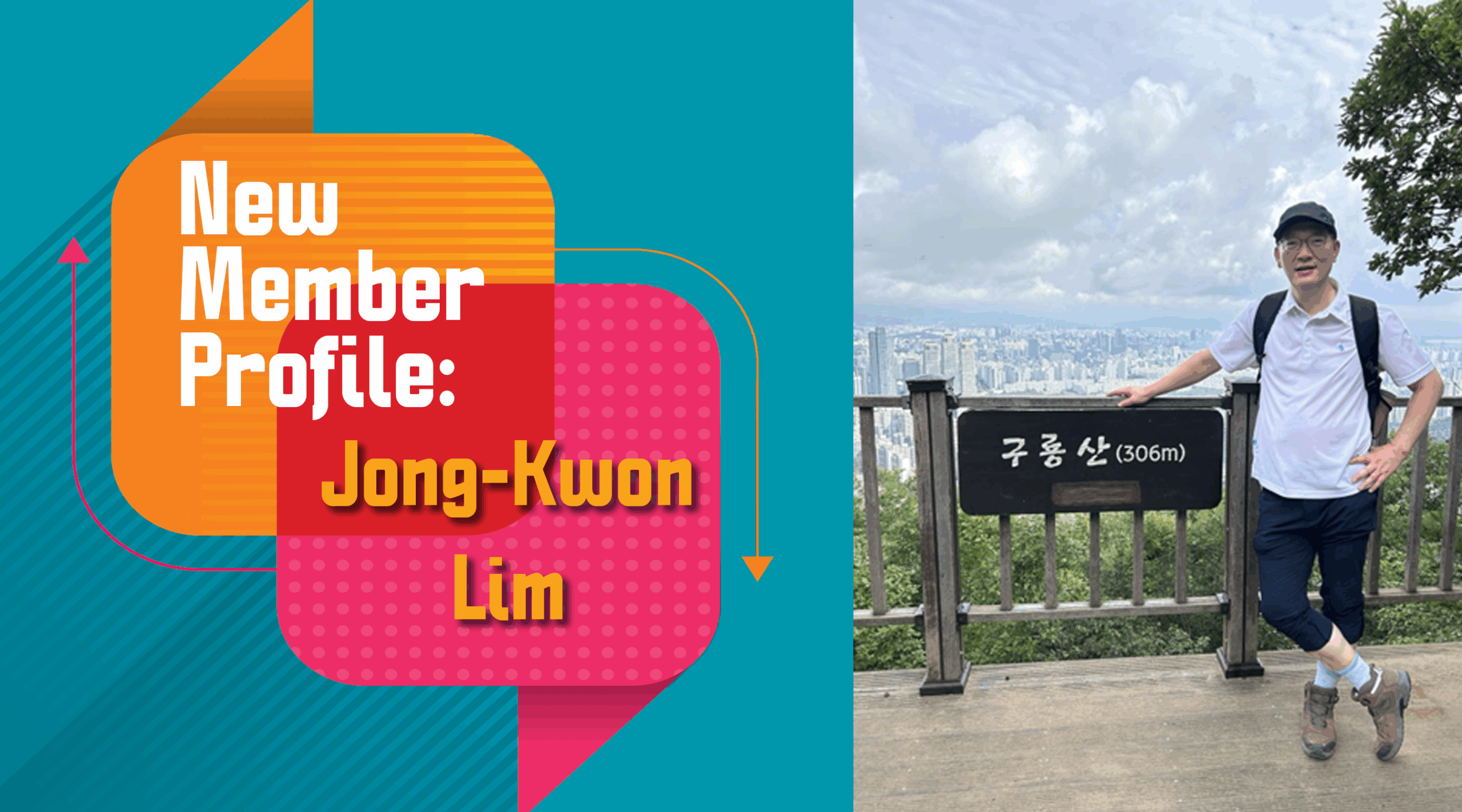
Meet Jong-Kwon Lim
Where are you from, and where did you go to school?
I was born on Geoje Island in the southern part of South Korea and spent my childhood in Busan, the famous port city. I moved to Seoul during middle school and have lived there ever since. I graduated from Hanyang University with a bachelor’s degree in civil engineering, renowned for its engineering expertise in Korea. Subsequently, I earned a master’s degree in structural reliability and a Ph.D. in reliability-based LCC optimization from the same university.
What’s something about you (a fun fact) that not many people know?
Many people don’t know this, but I am actually very curious about space. I like places where I can see the stars clearly at night. When I look up at the night sky and share a cup of tea or a glass of soju, talking about the miracles we encounter on this small planet in the universe, I quickly become close with people.
The magnificent Andromeda Galaxy is 200,000 light-years in diameter, and even if you travel at the speed of light, it would take 2.5 million light-years to reach it, where you might encounter just one of its countless stars and feel a sense of emptiness. Our galaxy and the Andromeda Galaxy will collide in the distant future. However, there is no need to worry. The distance between stars is so great that it is more accurate to describe this as a merger rather than a collision, as it is a collision between two very low-density spaces over a long period of time. It is likely that the life forms living inside the stars are not even aware of the collision.
You, the reader of this text, have already encountered me with odds lower than winning the lottery. Would you not like to form a connection with me?
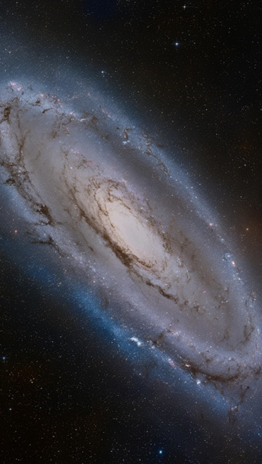
Figure 1. Andromeda Galaxy
Where do you work?
I’m currently focused on my graduate studies in Civil Engineering, specializing in project management. My coursework includes project planning, cost control, risk analysis, and construction law, all of which prepare me for a career in infrastructure and project delivery.
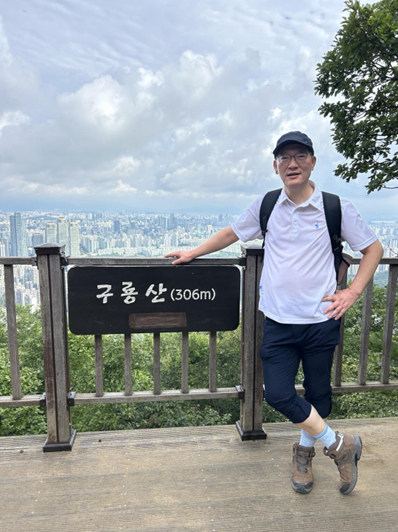
Figure 2. Me on the hill behind the company
What do you love most about your job?
What I love most is learning how to manage the various moving parts of complex projects, especially how time, cost, and quality are balanced to meet a project’s goals. I also enjoy the team-based learning approach, which mirrors the real-world project environment.
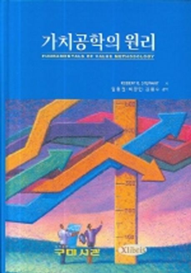
Figure 3. Fundamentals of Value Methodology (Translated)
Whether public or private, large-scale projects require rigorous risk management, as failures in this area can have a significant impact on residents’ and citizens’ lives. Regrettably, awareness of these management techniques remains low, and they are not being properly applied.
I plan to dedicate the remainder of my career to institutionalising PRM technology, improving its culture, and enhancing its maturity. I have been writing a project risk management guideline book since 2020 (See Figure 4), and the fourth edition is currently in preparation. This book is only available in Korean.
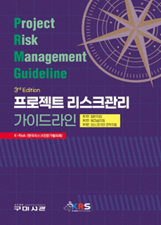
Figure 4. PRM Guideline(3rd Edition) by published K-Risk
Do you have a project story to share?
I am currently engaged in VE and RM consultancy for public and private projects of varying scales. I have recent experience conducting risk analysis consultancy for GTX, and have also undertaken VERA consultancy, which combined VE and RM to address grievances and resolve issues concerning petrol stations incorporated due to road and bridge construction. Among them, I would like to introduce my experience with the GTX-A project(See Great Train eXpress – Wikipedia). Currently, GTX-A is under construction, while five additional lines, from B to F, are in the planning stage.
The GTX projects, high-speed underground railway projects, are currently underway in the Seoul metropolitan area. I recently conducted a schedule risk analysis consulting project for the GTX-A line, which is currently under construction. I had been working on this project for about a year. Typically, risk analysis is conducted using programmes like WSDOT’s PRAM or Crystal Ball, focusing primarily on costs. However, this project was a private investment initiative with a strong need to strictly adhere to the completion deadline, making schedule risk analysis and management critically important. Our team, including Mr. Park, the Vice Chair of the AACE Korea Section, decided to utilize P6/PRM tools as decision-support tools. We made significant efforts to improve the quality of the schedule baseline modelling. Although it took considerable time to input schedule uncertainties, reflect them in the analysis, and understand the results, we approached the project with seriousness, and the outcomes were utilised in critical decision-making processes. Through this project, I gained valuable insights into what is essential for integrated schedule or schedule-cost risk analysis in South Korea and gained a more mature perspective personally.
We analysed various risks that could arise during construction, such as materials, construction methods, lack of skilled personnel, compensation, construction, and merger bias, and derived a completion date that took these risks into consideration.
However, in Korea, where the risk management culture has yet to mature, numerous challenges have also been identified. While I cannot go into detail here, I look forward to sharing these experiences with you in various future engagements and hearing your insights.
What are your future goals and aspirations for your career? Did someone inspire you to be on this career path?
Going forward, my goal is to establish a Korean-style risk management system and, in conjunction with this, develop internationally recognised cost estimation standards (AACE, GAO, IPA, etc.) that are tailored to domestic conditions.
My doctoral advisor, Professor Cho, provided me with the academic skills and inspiration to actively address uncertainty. Additionally, my mentor in value engineering (VE) is Robert Stewart, the current president of SAVE International. I had the opportunity to translate and publish his book into Korean. He is my mentor in VE.
In addition, my mentor, Dr. Ovidiu Cretu, played a significant role in my growth in the RM field. I translated his book. I communicated with him several times via Skype to learn RBES, a risk-based estimation tool he developed. Despite my limited English skills, he made a considerable effort to explain things clearly. The conversations with him and the experience of translating his book contributed significantly to my growth.
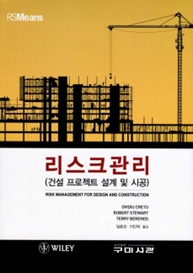
Figure 4. Dr. Obidu Kretu’s ‘Risk Management for Design and Construction’ (Korean)
The photo below shows him telling me about his experience and me giving a presentation at the WRC conference in Korea, where he was invited. It’s already been 15 years since I took that photo.
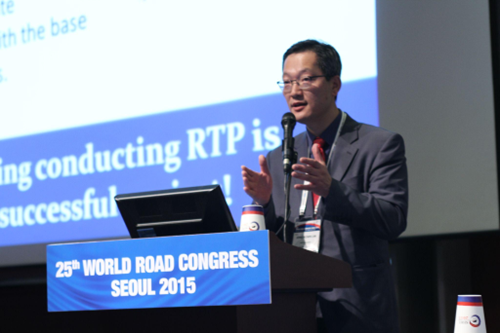
Figure 5. Sharing Dr. Ovidiu Cretu’s experience and message (Seattle tunnel boring machine failure) at the 25th WRC Seoul 2015.
What is the biggest career challenge you’ve had to overcome? What’s been your favorite or most memorable moment of your career?
Frankly speaking, there is nothing I can boast about having overcome. However, one crucial task remains that must be tackled: embedding project and asset risk management methodologies into organizational culture and systems. The process of expanding from simple technical calculations to policy and institutional frameworks has been far from smooth. While it is possible to teach excellent techniques and methods at university, developing these into institutional policy is something I cannot achieve alone.
Therefore, I organized a non-profit organization called K-Risk with several like-minded friends, and we have been conducting non-profit activities such as seminars, conferences, and publications. Furthermore, I have recently been working to revive the AACE Korea Chapter. I hope that AACE activities will create positive synergy for the development of K-Risk
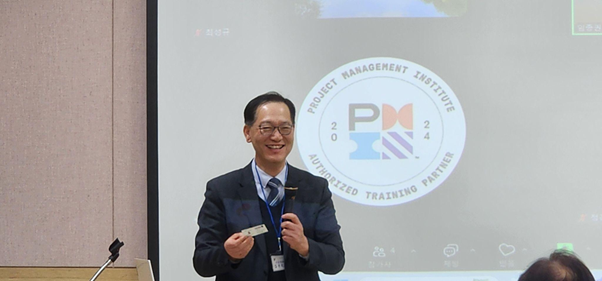
Figure 6. Giving a speech at the 4th PRM Conference of K-Risk/KICEM
Why did you join AACE?
As mentioned earlier, the “Project Risk Management” methodology is not readily accepted within Korean culture. Therefore, I established a non-profit organisation called K-Risk to facilitate the practical application of this methodology. I wish to foster the development of K-Risk and ensure that a risk management culture takes deep root in Korea. I believe that becoming an AACE member and reviving the Korean chapter will contribute to these objectives. I wish to learn knowledge and wisdom through deeper networking with AACE members.
What do you like most about being an AACE member?
The biggest advantage is that you can share knowledge and trends with experts from around the world in real time through webinars while sitting in your office. This was unimaginable before COVID-19. In particular, the latest information obtained through the TCM framework, RP documents, and conferences is very helpful for my research and consulting activities. And above all, the TCM Framework and Recommended Practices materials are excellent. To work in this field, one simply cannot avoid consulting these resources.
What advice would you give to someone who wants to enter the field?
Those interested in project management, risk-based cost estimation, risk analysis, and risk management, cost estimates of early stage are encouraged to join professional associations such as AACE early on. This field goes beyond simple cost calculation problems, requiring teamwork, decision-making support, and a policy perspective, and it also covers a wide range of topics, focusing front-end loading. By becoming a member, you will gain a broad perspective and an international outlook. In particular, since the Korean chapter has recently been established, we hope that relevant professionals residing in Korea will join AACE and participate in the events and activities of the Korean chapter.
Rate this post
Click on a star to rate it!
Average rating 0 / 5. Vote count: 0
No votes so far! Be the first to rate this post.