
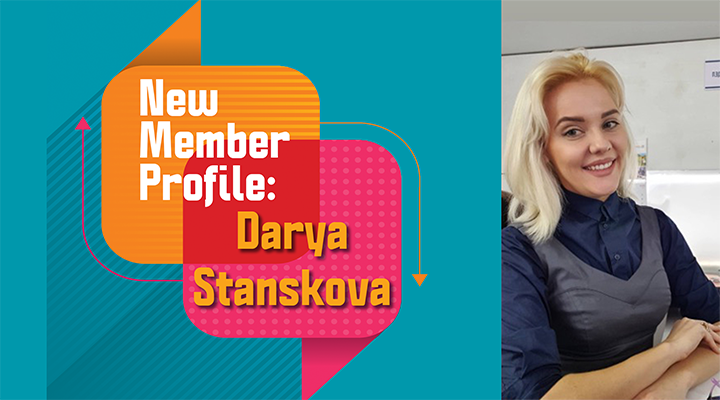
Meet Darya Stanskova
Where are you from, and where did you study?
I was born in Central Asia, in Karaganda (Republic of Kazakhstan) in 1990. I studied at Abylkas Saginov Karaganda Technical University, earning a bachelor’s degree in economics (2006–2011).
Fun fact about yourself:
I am an economist by education, but I’ve always worked in technical fields. I dream of building a system where engineers and financial experts can see a project the same way—this would help avoid conflicts and lead to more effective decisions. I often joke that I want to end the eternal debate between engineers and economists and start building great things together.
Where do you work now, and what do you do?
I have over 10 years of experience in the energy and construction sectors. I’ve worked as a cost estimator, senior estimator, project manager, and technical lead. I have deep expertise in cost estimating, planning, and managing infrastructure projects, strong leadership skills and a continuous drive to improve processes.
I’m actively involved in volunteer work, continuing my education, and developing new professional skills. I’m also working on my invention—a digital platform with AI elements to integrate technical and financial planning in projects.
In addition, I study how older workers adapt to technology and automation and develop practical tools to support their learning and retention in the workforce. I’m also interested in sustainable construction materials and work on embedding them into cost estimation systems and evaluation frameworks.
What do you love most about your work?
I love precision—even though it’s often in short supply! I enjoy working with people, sharing knowledge, and learning from others. To me, cost estimating is a kind of technical creativity, where I can shape a project from its beginning. I love the full lifecycle in project management—from planning to the final result.
Do you have a project story to share?
Reflections: Estimator or Engineer?
Remember the old tale about the hare’s skin and seven tiny caps? A man came to a tailor and asked him to make a cap from a hare’s skin. The tailor said, “Sure!” Then the man came back and asked for two. Then three. Eventually, seven caps — all made from the same single skin. In the end, the caps were so small they only fit dolls. But the tailor still said, “I can do it” — that was his answer to the strange request, even though inside he probably wondered if the man really understood where this was going…
Estimators often feel the same way. We’re told, “We need more, faster, better — but with the same or even less budget.” Sound familiar? I see this “hare’s skin” in almost every project — limited budget, high expectations, stretched resources.
And that raises the question: who is the estimator today — just a number cruncher, or an engineer who challenges decisions and guides the project’s course? When does an estimator stop being the “project accountant” and become a true engineer?
Today’s estimator is a strategic professional who verifies data, asks tough questions, defines scope boundaries, and influences decisions. That’s engineering.
What are your future goals and aspirations for your career? Did someone inspire you to be on this career path?
My main career goals are continuous professional development and applying my knowledge and experience to create effective and innovative projects. In the future, I plan to develop various digital solutions with elements of artificial intelligence to optimize technical and financial processes.
I am inspired by people who are not afraid to challenge conventional approaches and introduce innovations, as well as those who see their work not just as task completion but as an opportunity to make the industry better and more accessible for everyone. I have been motivated by experienced professionals from the energy and construction sectors I have worked with, as well as stories of successful women engineers and entrepreneurs who have proven that combining technical expertise with strategic thinking is possible.
Biggest challenge and most memorable project:
In 2014, I started working as a cost estimator at a major thermal power plant. I was just 24, joining a department of experienced employees who were used to doing everything manually. A year later, a new director set a bold goal: full digitalization of all processes, from planning to procurement.
I was appointed to lead the training and adaptation team. It was a real challenge—I was a young specialist tasked with teaching senior colleagues to work in a new digital environment. At first, there was resistance, frustration, and even talk of retirement to avoid the changes.
That’s when I started to wonder: why do older workers often struggle with adopting new technologies, and what can be done to help them adapt? This marked the beginning of my journey into designing adaptive learning strategies for mature professionals in the age of automation.
Goals and professional mission:
My main goal is to validate my qualifications and obtain a professional US license to fully realize my potential. I also aim to confirm my international experience in cost engineering, planning, and project management, including certifications through AACE.
I see myself as a bridge between engineering and economics—especially on strategic projects where accuracy and technical literacy must go hand in hand.
I’m driven to make a real contribution: building meaningful infrastructure, helping people grow, and making the industry more inclusive for professionals from diverse backgrounds.
Why did you join AACE?
Now living in the US, I want to build professional connections, exchange knowledge, and learn from the best. AACE provides access to current standards, peer insights, and development tools. I also value the certification opportunities—in cost estimation, risk management, planning, and controls—which help structure and validate my experience.
What do you enjoy most about being part of AACE?
I appreciate the professional community where quality and standards are genuinely valued. Being part of AACE helps me stay updated on industry trends, exchange ideas, and sharpen my skills.
I also enjoy mentoring newcomers and supporting those entering the profession—just as I was supported when I started my journey.
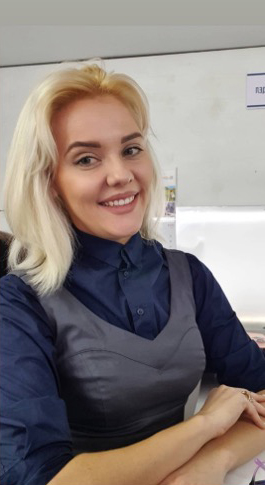
Lots of work is no reason to be sad!
That moment when a new project lands!)))
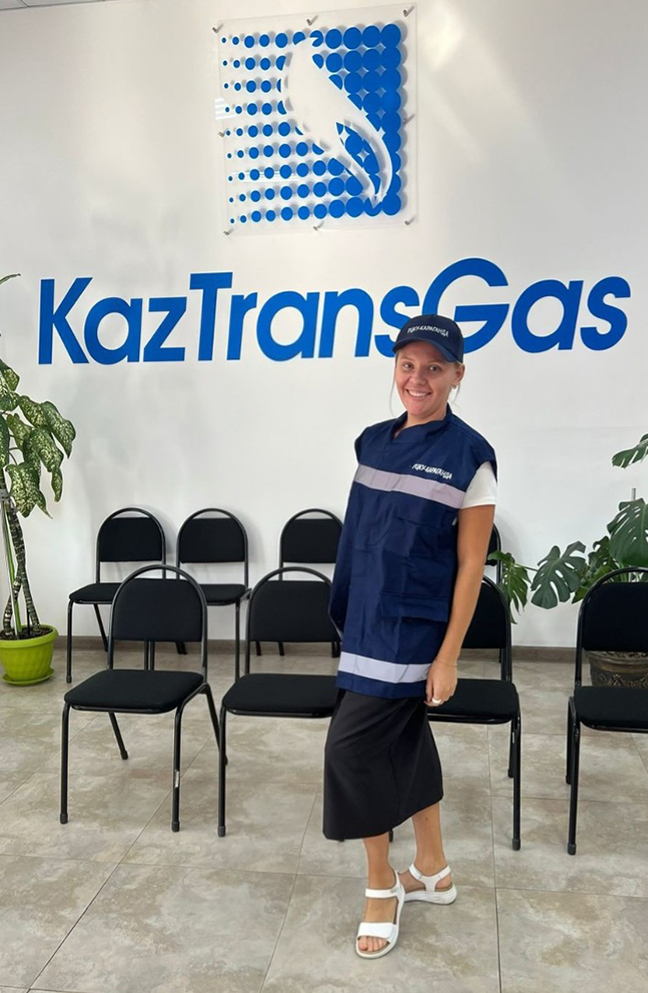
That moment when the new uniform finally arrives —
ready to tackle the day with fresh energy!”
Rate this post
Click on a star to rate it!
Average rating 5 / 5. Vote count: 2
No votes so far! Be the first to rate this post.