
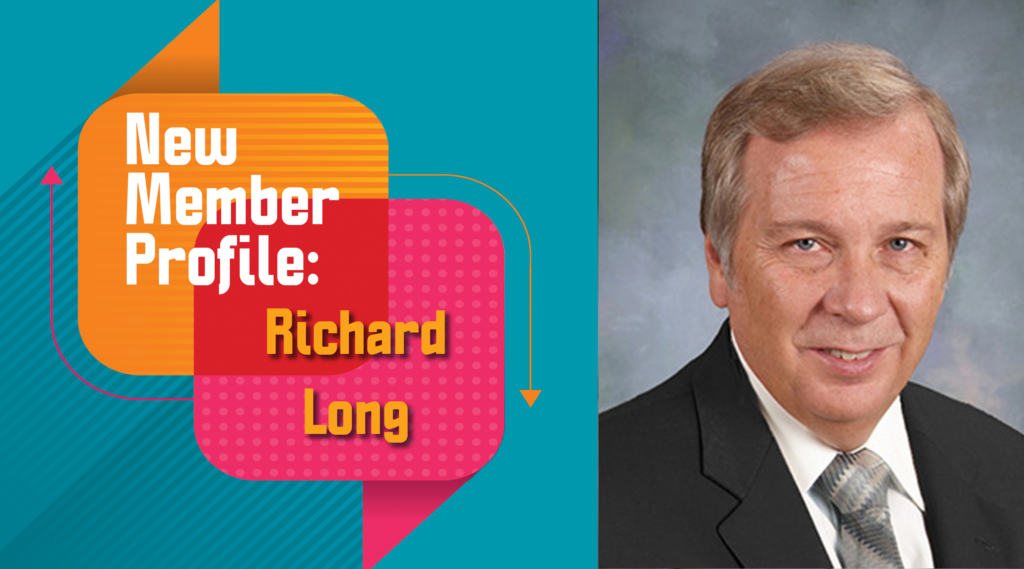
Meet Richard Long
Richard J. Long, PE, P.Eng., is the founder of Long International, a Colorado-based construction claims and project management consulting firm supporting owners, engineering and construction firms, and contractors on complex projects worldwide. With a career spanning more than five decades, Richard is known for his work in dispute resolution and expert support, along with deep experience in project management, cost and schedule control, and claims prevention across energy, industrial, and infrastructure sectors.
Where are you from, and where do you attend school?
I’m originally from Pittsburgh, PA but moved to Colorado in 1973. I am a die-hard Steelers and Broncos fan. I earned my B.S. in chemical engineering from the University of Pittsburgh and my M.S. in chemical and petroleum refining engineering from the Colorado School of Mines. I am a licensed Professional Engineer in Colorado, as well as Newfoundland and Labrador, Canada.
What’s something about you (a fun fact) that not many people know?
A fun fact most people do not know is that I witnessed Franco Harris’ Immaculate Reception in December 1972, and Bill Mazeroski’s bottom of the 9th inning home run to enable the Pittsburgh Pirates to beat the Yankees in the 1960 World Series. I recently built a model train railroad with six O-scale and two G-scale trains, and it has been a great counterbalance to the intensity of large projects and tight deadlines.
Where do you work?
Long International is based in Littleton, Colorado, and we have offices in Orlando, New York, Houston, Atlanta, Boston, and the UAE. We provide construction claims and project management consulting, including dispute support, expert testimony, and claims prevention services for clients in the US and internationally.
What do you love most about your job or current school studies?
What I enjoy most is preparing complex schedule delay, loss of productivity, and project management assessment expert reports on large complex projects involved in contentious arbitrations or litigation. I also value the opportunity to provide training and share practical approaches with clients that help projects avoid disputes before they start.
Do you have a project story to share?
One project that stands out was serving as a tribunal-appointed schedule delay expert in an international arbitration involving a large refinery project. Each side had an expert that failed to support their client’s positions. It reinforced the importance of using industry accepted methodologies to demonstrate entitlement to extensions of time, compensable delay costs, and recovery of loss of productivity costs.
What are your future goals and aspirations for your career? Did someone inspire you to be on this career path?
My goal is to keep contributing to the profession by sharing lessons learned through writing, training, and mentoring. I was drawn to this career path by strong engineers and project leaders early in my career who emphasized disciplined fundamentals, clear thinking, strong writing skills, and doing the work the right way even when conditions are challenging.
What is the biggest career challenge you’ve had to overcome?
The biggest challenges tend to come from complex projects where multiple issues overlap, and the facts are not organized or documented consistently. Those situations require patience, rigor, and a commitment to follow the evidence. The most memorable moments are when a clear, well-supported analysis helps a client to prevail in a high stakes dispute.
Why did you join AACE?
I joined AACE because the community is grounded in practical project controls and cost engineering, and I value staying connected to peers who are committed to improving project outcomes through standards, recommended practices, and professional development.
What do you like most about being an AACE member?
I appreciate the technical depth and the real-world perspective AACE brings. The best part is the community, learning from practitioners across industries, and having a place where cost, schedule, risk, and controls are treated as core disciplines, not afterthoughts.
What advice would you give to someone who wants to enter the field?
Build strong fundamentals in cost and schedule, learn how work is executed in the field, and develop disciplined documentation habits. Ask good questions, stay curious, and focus on clear cause-and-effect thinking. Those skills will serve you whether you are supporting delivery, advising leadership, or resolving disputes.

Pikes Peak with America the Beautiful below
Rate this post
Click on a star to rate it!
Average rating 5 / 5. Vote count: 1
No votes so far! Be the first to rate this post.